How clinical

studies measure

what matters

A clinical study tests if a treatment option works and how safe it is.1 In tenosynovial giant cell tumor (TGCT) research, there are different ways to measure a treatment's effect on the tumor and TGCT symptoms, such as pain.2,3 

Learning about these measures can help you understand and discuss your treatment options with your care team. 

Clinical study basics

Clinical studies are broken down into phases, so that different kinds of information can be gathered.

  • Phase 1: typically small trials of 15 to 30 people that focus on safety1,4
  • Phase 2: slightly larger and start to focus on the treatment's effectiveness as well as its safety
  • Phase 3: study how the treatment works in a larger group (~100+ people), and weigh whether it offers enough benefit to be approved for use1,4

CLINICAL STUDY TERMS TO KNOW

Study Design

The plan for studying a treatment, including what it will be studied against, for how long, what measures will be used, and which patients were included or excluded from the study.4,5

Placebo

An inactive treatment, like a sugar pill, that’s designed to look  identical to the treatment being studied.6 In clinical studies, a treatment can be compared against placebo or an existing treatment.

Randomization

People are assigned by chance to receive either the treatment being studied or what it’s being compared against.6

Measuring tumor size

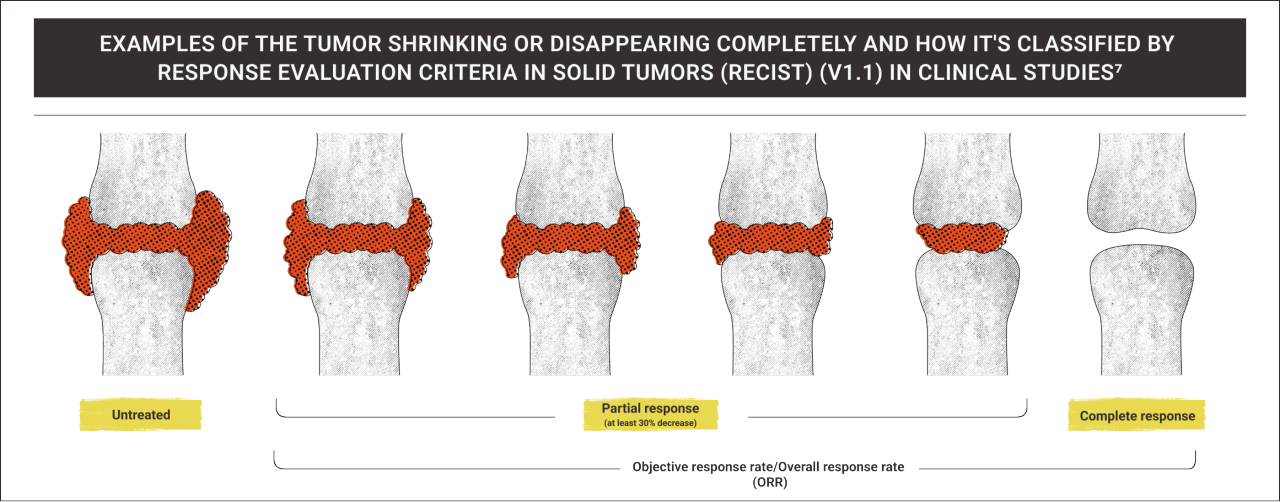
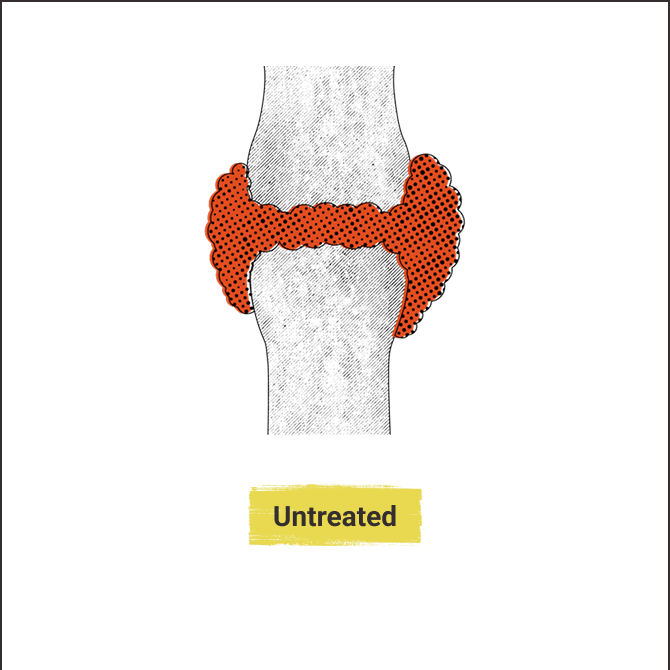
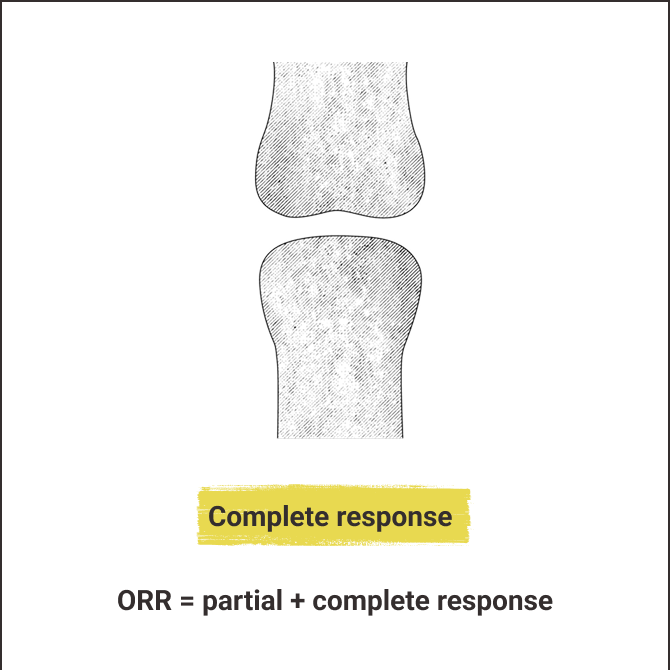
A tumor can change in different ways over time, including getting larger, shrinking, or disappearing completely.7

Possible changes that can happen over time 
and how they are classified in clinical studies7

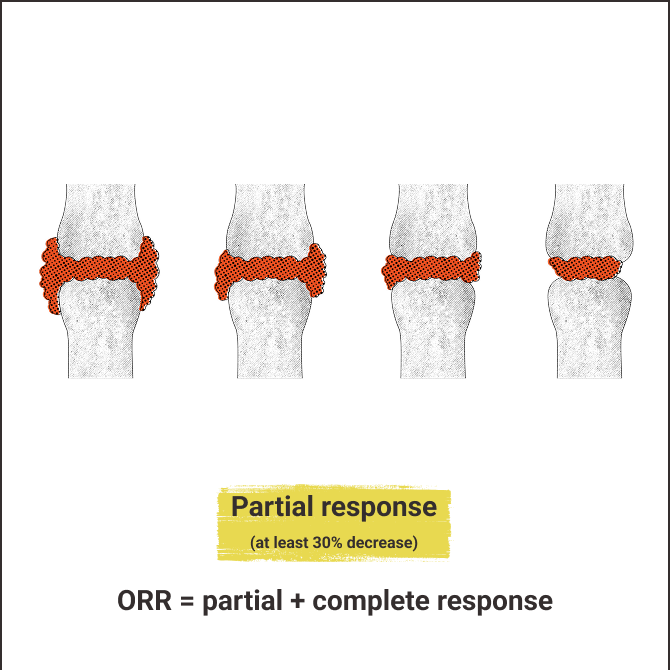
EXAMPLES OF THE TUMOR SHRINKING OR DISAPPEARING COMPLETELY AND HOW IT'S CLASSIFIED BY RESPONSE EVALUATION CRITERIA IN SOLID TUMORS (RECIST) (V1.1) IN CLINICAL STUDIES7

Ways to measure tumor size

When looking at TGCT treatments, you may come across the terms “objective response rate” or “overall response rate.” These terms mean the same thing and are often abbreviated as ORR. This is the percentage of people whose tumor shrank by a defined amount.7


This could be measured with medical imaging, such as computed tomography (CT) scan or magnetic resonance imaging (MRI).8

CHANGES IN TUMOR SIZE CAN BE MEASURED IN DIFFERENT WAYS INCLUDING:

TUMOR LENGTH

Another term you may see is Response Evaluation Criteria in Solid Tumors (RECIST). This is a common way of tracking changes in the length of the tumor.9

In TGCT trials, a tumor shrinkage of at least 30% is considered an objective response by RECIST v1.1.7

TUMOR VOLUME

Tumor volume score (TVS) measures how much space the tumor takes up and how that changes
with treatment.8,10

A tumor shrinkage of at least 50% is considered an objective response by TVS.11

Measuring changes in symptoms

TGCT clinical studies typically look at whether a treatment improves the kinds of symptoms that you may experience, such as pain, stiffness, reduced range of motion, and loss of physical function.3

Common ways of measuring changes in TGCT symptoms

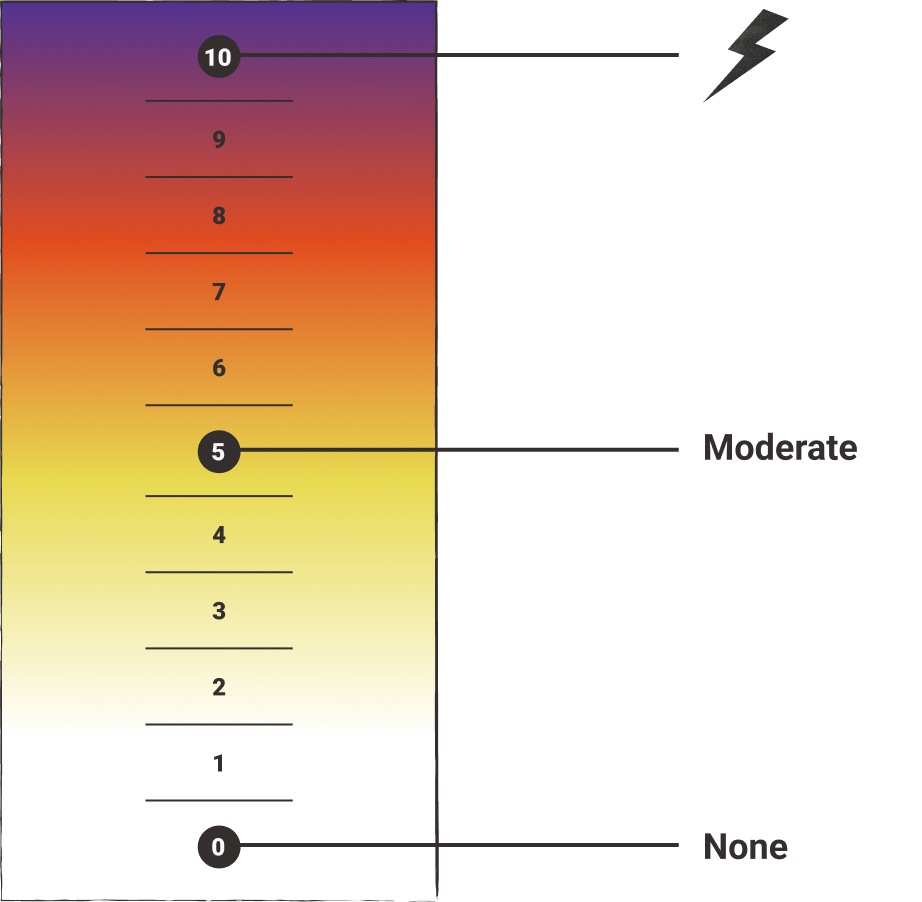
  • The Brief Pain Inventory (BPI) questionnaire is used to rate the severity of a person’s pain and how it affects their daily activities 
and mental health
  • Pain is rated from 0 (no pain) to 10 (worst possible pain)

How BPI shows improvement

Let’s say you’re experiencing pain that gets in the way of doing your job at work, a 5 or 6 on the scale. After treatment, your pain may be reduced to a 2 or 3, making it easier to go about your normal routine.

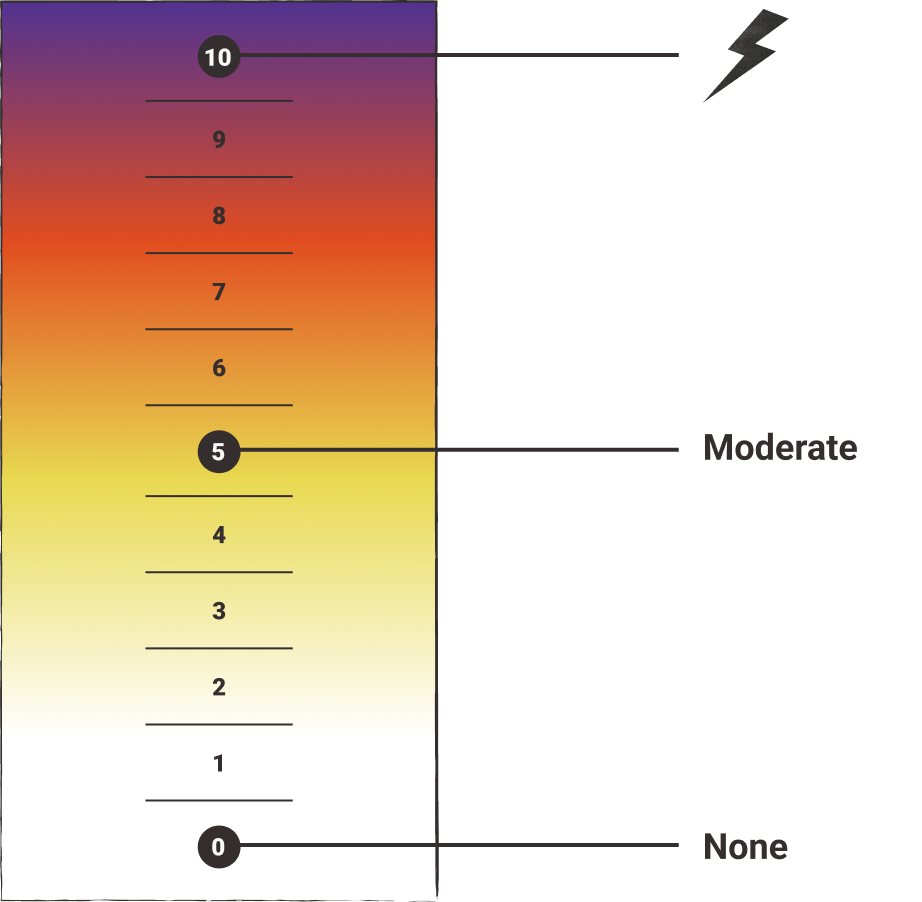
  • Stiffness is measured on a similar scale as pain
  • The Stiffness scale gauges the severity of a person’s stiffness 
in the last 24 hours 
  • Stiffness is rated from 0 (no stiffness) to 10 (worst possible stiffness)

How the Stiffness scale shows improvement

If you’re experiencing stiffness that’s a 5 or 6 on the scale, this may get in the way of hobbies or other activities. After taking medication, your stiffness may feel more like a 2 or 3, making it easier to do things you enjoy.

Pain Meter
TGCT-knee-bending

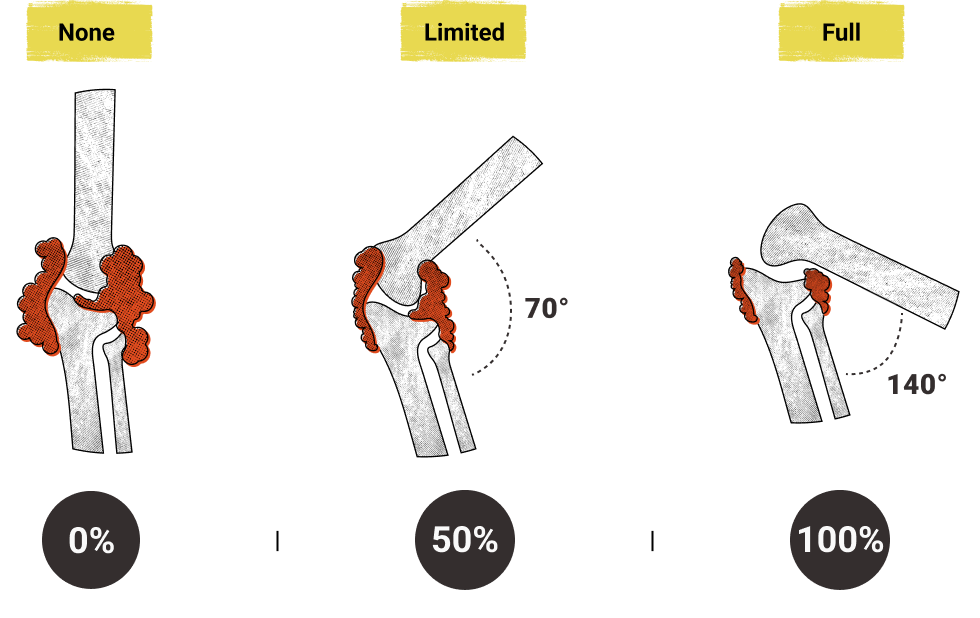
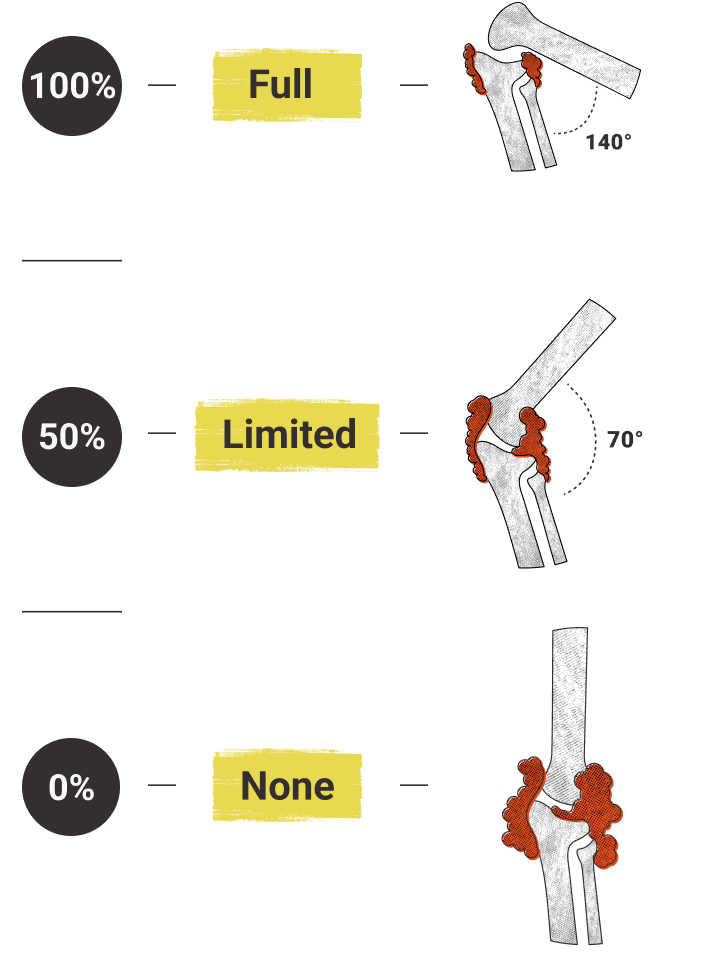
RANGE OF MOTION14,15

  • A variety of movements in the affected joint are checked by measuring the angle at the start and the end of each movement
  • The beginning angle is subtracted from the ending angle to find the range of motion (ROM)
  • These results are compared with set norms for that joint to find the percentage of full ROM 
mobile-flex

How the ROM scale may show progress

Let’s say TGCT limits range of motion in your knee to 70% of the full ROM. This could make it hard to climb stairs. After treatment, your ROM could increase, making it easier to get around. 

PHYSICAL FUNCTION16,17

  • Pain, stiffness, and reduced ROM can get in the way of doing everyday tasks
  • The Patient-Reported Outcomes Measurement Information System (PROMIS) Physical Function (PF) is a questionnaire that doctors have their patients fill out on a regular schedule to track how their ability to do daily activities changes over time
  • A person with a score of 50 out of 100 has average function

Above average

Score: 51-100

A greater-than-average ability to do routine daily activities

TREATMENT TARGET: Average

Score: 50

Able to do routine daily activities like walking and running errands

Below average

Score: 0-49

May struggle to get dressed, walk, or do other daily activities

How PROMIS-PF shows improvement

Let’s say you score 40 out of 100 because you have trouble walking. After treatment, your score may increase, and you could find it easier to go about your daily routine.

Studying safety

Making sure a treatment option is safe for you to use is one of 
the most important jobs of a clinical study.1 There are several different ways of looking at safety that are typically used in TGCT research.18

Common ways of measuring safety in TGCT clinical studies OF MEDICATIONS18

Percentage of people with
side effects related to treatment 

Percentage of people who reduced their dose due to side effects

Percentage of people who stopped treatment due to side effects

When researchers report side effects in a clinical study, they also note how severe they are, including whether they are serious, life-threatening, or fatal.19

Safety is just as important with surgery for TGCT, but it’s monitored differently.
Some common safety concerns with surgery are infections, bleeding after surgery, and chronic joint stiffness.20-25

The more you know, the better you can work with your care team

Stay on top of the latest information about TGCT. 

If you have questions about any developments in TGCT,
talk to your care team.

SIGN UP FOR MORE INFORMATION ON TGCT TREATMENTS

SIGN UP FOR MORE INFORMATION ON TGCT TREATMENTS

To learn about the latest insights on TGCT treatments and support to help you find the right treatment plan, sign up now. 

REFERENCES

1. TGCT Support. Clinical trials. Updated 2025. Accessed March 4, 2026. https://www.tgctsupport.org/clinical-trials.html. 2. Stacchiotti S, Dürr HR, Schaefer IM, et al. Best clinical management of tenosynovial giant cell tumour (TGCT): a consensus paper from the community of experts. Cancer Treat Rev. 2023;112:102491. doi:10.1016/j.ctrv.2022.102491. 3. Gelhorn HL, Tong S, McQuarrie K, et al. Patient-reported symptoms of tenosynovial giant cell tumors. Clin Ther. 2016;38(4):778-793. doi:10.1016/j.clinthera.2016.03.008. 4. National Comprehensive Cancer Network. Why should I consider a clinical trial? Accessed March 4, 2026. https://www.nccn.org/docs/default-source/patient-resources/clinical-trials/download-a-printable-handout-to-learn-more-about-clinical-trials.pdf. 5. US Food and Drug Administration. Step 3: clinical research. Accessed March 4, 2026. https://www.fda.gov/patients/drug-development-process/step-3-clinical-research. 6. National Institutes of Health. Glossary of Common Terms. Accessed March 4, 2026. https://www.nih.gov/health-information/nih-clinical-research-trials-you/glossary-common-terms. 7. Villaruz LC, Socinski MA. The clinical viewpoint: definitions, limitations of RECIST, practical considerations of measurement. Clin Cancer Res. 2013;19(10):2629-2636. doi:10.1158/1078-0432.CCR-12-2935. 8. Goldmacher GV, Conklin J. The use of tumour volumetrics to assess response to therapy in anticancer clinical trials. Br J Clin Pharmacol. 2012;73(6):846-854. doi:10.1111/j.1365-2125.2012.04179.x. 9. Ruchalski K, Braschi-Amirfarzan M, Douek M, et al. A primer on RECIST 1.1 for oncologic imaging in clinical drug trials. Radiol lmaging Cancer. 2021;3(3):e210008. doi:10.1148/rycan.2021210008. 10. National Cancer Institute. Tumor volume. Accessed March 6, 2026. https://www.cancer.gov/publications/dictionaries/cancer-terms/def/tumor-volume. 11. Peterfy C, Chen Y, Countryman P, et al. CSF1 receptor inhibition of tenosynovial giant cell tumor using novel disease-specific MRI measures of tumor burden. Future Oncol. 2022;18(12):1449-1459. doi:10.2217/fon-2021-143. 12. Shahid A, Wilkinson K, Marcu S, Shapiro CM, eds. STOP, THAT and One Hundred Other Sleep Scales. Springer; 2012. 13. Speck RM, Ye X, Bernthal NM, Gelhorn HL. Psychometric properties of a custom Patient-Reported Outcomes Measurement Information System (PROMIS) physical function short form and worst stiffness numeric rating scale in tenosynovial giant cell tumors. J Patient Rep Outcomes. 2020;4(1):61. doi:10.1186/s41687-020-00217-6. 14. Shelbourne KD, Biggs A, Gray T. Deconditioned knee: the effectiveness of a rehabilitation program that restores normal knee motion to improve symptoms and function. N Am J Sports Phys Ther. 2007;2(2):81-89. 15. Gandbhir VN, Cunha B. Goniometer. In: StatPearls. Treasure Island (FL): StatPearls Publishing; June 7, 2020. 16. Stern S, McKenzie PF, Bernthal N, et al. Localized and diffuse tenosynovial giant cell tumor: real-world results from a patient observational registry. Future Oncol. 2025;21(12):1501-1510. doi:10.1080/14796694.2025.2488635. 17. Jensen RE, Potosky AL, Reeve BB, et al. Validation of the PROMIS physical function measures in a diverse US population-based cohort of cancer patients. Qual Life Res. 2015;24(10):2333-2344. doi:10.1007/s11136-015-0992-9.
18. Palmerini E, Trent JC, Hornicek FJ. Medical management of tenosynovial giant cell tumor. Curr Oncol Rep. 2025;27:844-855. doi:10.1007/s11912-025-01679-x. 19. National Cancer Institute. CTCAE and adverse event reporting. Accessed March 4, 2026. https://dctd.cancer.gov/research/ctep-trials/for-sites/adverse-events. 20. Christensen AMM, Dowler K, Doron S. Surgical site infection metrics: dissecting the differences between the National Health and Safety Network and the National Surgical Quality Improvement Program. Antimicrob Steward Healthc Epidemiol. 2021;1(1):e16. doi:10.1017/ash.2021.176. 21. Bali RK. Operating room protocols and infection control. In: Bali RK, Kumar P, Sharma V, eds. Oral and Maxillofacial Surgery for the Clinician. Springer; 2020;173-194. 22. Tobin EH, Zahra F. Nosocomial infections. In: StatPearls. Treasure Island (FL): StatPearls Publishing; August 2, 2025. 23. Roshanov PS. Bleeding independently associated with mortality after noncardiac surgery (BIMS): an international prospective cohort study establishing diagnostic criteria and prognostic importance. Br J Anaesth. 2021;126(1):163-171. doi:10.1016/j.bja.2020.06.051. 24. Halme ALE, Roshanov PS, Tornberg SV, et al. Timing of major postoperative bleeding among patients undergoing surgery. JAMA Netw Open. 2024;7(4):e244581. doi:10.1001/jamanetworkopen.2024.4581. 25. Spierenburg G, van der Heijden L, Mastboom MJL, et al. Surgical management of 144 diffuse-type TGCT patients in a single institution: a 20-year cohort study. J Surg Oncol. 2022;126(6):1087-1095. doi:10.1002/jso.26991